
Samuel: Chapter 1
On continuity, transformation and renewal
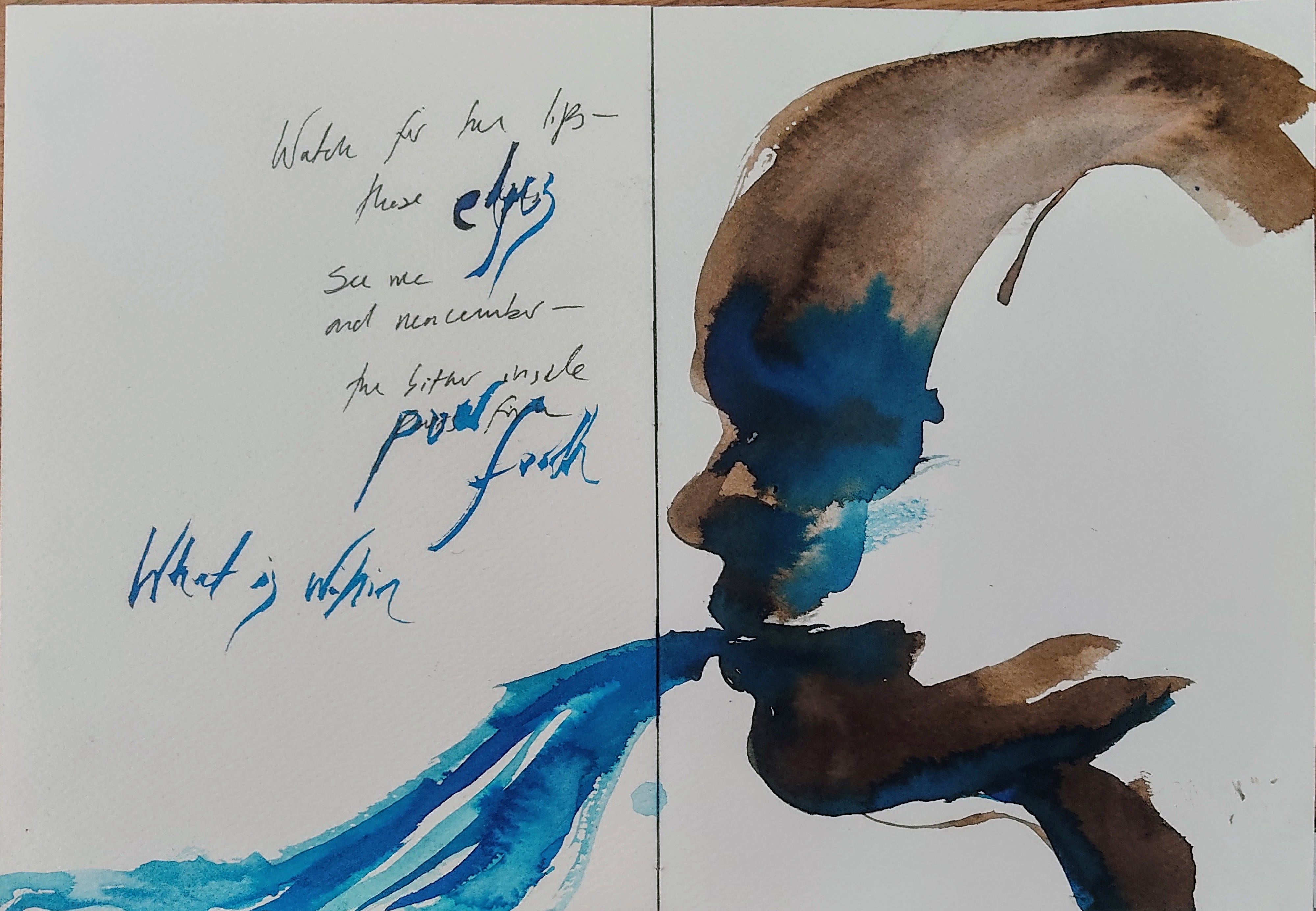
Watch for the lips--the edges
where the bitter inside
pours forth—
See me, and remember.
For full chapter, click here
"There was a man...from the hill country of Ephraim"--we have heard this opening before—it is a near-perfect echo of the opening of the final section of Judges, identical but for the additional detail of the hometown of Rammatayim. Indeed, the chapter is dense with intertextual links to the closing of Judges, the juxtaposition acting as an implicit commentary.
As in the case of Michah, the story of a "man" very quickly becomes a story about his relationship with women--in Judges, Micah's mother; here, Elkana's two wives. The official story of the "man" is but a small detail in the teeming complexity of the family saga.The House of God in Shilo--whose negative shape haunts the backdrop of Judges as the road untaken by the Dannites, and as the home of the abducted dancing girls--here moves center stage. Now, for the first time, it plays the unifying role envisioned by Moses: it is as a locus of pilgrimage miyamim yemima (another direct echo of the closing of Judges). As in Judges, we have a story of barrenness that is resolved with a child who is dedicated as a Nazarite before conception, a child whose hair will never be touched by a razor. As in the closing of Judges, this is a story that places vows at the center.
Yet these very similarities highlight the essential differences.
If in the closing of Judges, women are utterly reduceds to their reproductive function, here, relationship is placed at the center: Penina has children, yet it is Hanna who is beloved, "though God had sealed her womb." "Am I not better to you than ten sons?" Elkana pleads.
If vows, up to this point, have been the most potent expression of patriarchal control, with a father and husband given the right to undo a woman's vows, while men's vows act to suppress female freedom, here it is a woman who makes the vow--and her husband acquiesces. "Do what is good (tov) in your eyes," Elkana says--the very expression is a subtle variation of the closing refrain of Judges "each man did what was just (yashar) in his eyes." From a "man's" search for justice, we move to a woman's search for "good".
At the center of this chapter is an act of prayer--one utterly different than what we have seen before. In the Book of Judges, the nation screams and weeps to God, at times with implicit blame. Hanna, by contrast, engages in an intimate conversation. From the "bitterness of her soul", she is mitpalel--using the until-now rare reflexive form that eventually became the standard Hebrew word for prayer: to intercede/ judge oneself.
This word is first used in reference to Abraham in Genesis 20:7: for he is a prophet and will pray (yitpalel) for you, implying that this kind of prayer is especially intimate, the domain of prophets who are in a unique relationship with God. Its next appearance is indeed with Moses, who prays for the complaining people in Numbers 11:2. This is its first appearance in female form, in an utterly private act.
The reflexive form implies that this conversation acts not only on God, but on Hanna's deeper self. "Hanna was speaking to her heart", discovering her own interiority and "hard spirit." "Her lips moved, but her voice was not heard" outwardly--only within. See me, she pleads. "Remember me, do not forget."
If in the story of the concubine, speaking to a girl's "heart" hints at manipulation and coercion, here it becomes an act of intimacy and strength. If Jephtha is destructively committed to the "utterings of his mouth," here the vow remains unuttered, existing as an internal promise.
This act of prayer is so radically new, Eli, the high priest, does not know what to make of it, mistaking it for intoxication. "No, my lord. A woman of hard spirit am I," Hanna responds with quiet dignity. This prayer is not an act of imbibing, but rather of pouring forth. And Eli, recognizing her authority, grants her request.
If the closing of Judges depicts widening ripples of dissolution--from family, to tribe, to nation--this chapter presents a redemptive movement: a growing interiority, reflected in a supportive relationship, which ripples outward to impact the House of God.